

Long Term Care Options for Veterans: Care at Home, in the Community, or in a Nursing Setting
Veterans who need ongoing daily support can explore long term care options for veterans through the VA, ranging from home care and adult day programs to nursing facilities. The best first step is contacting your loved one’s VA primary care team or social worker for a clinical needs assessment. They’ll help match care services with health needs, location, and available benefits.
Families often start by exploring dedicated veterans home care programs to keep aging seniors comfortable at home. Support can include routine visits from a VA home-based primary care nurse along with broader VA home and community-based services designed to preserve independence.
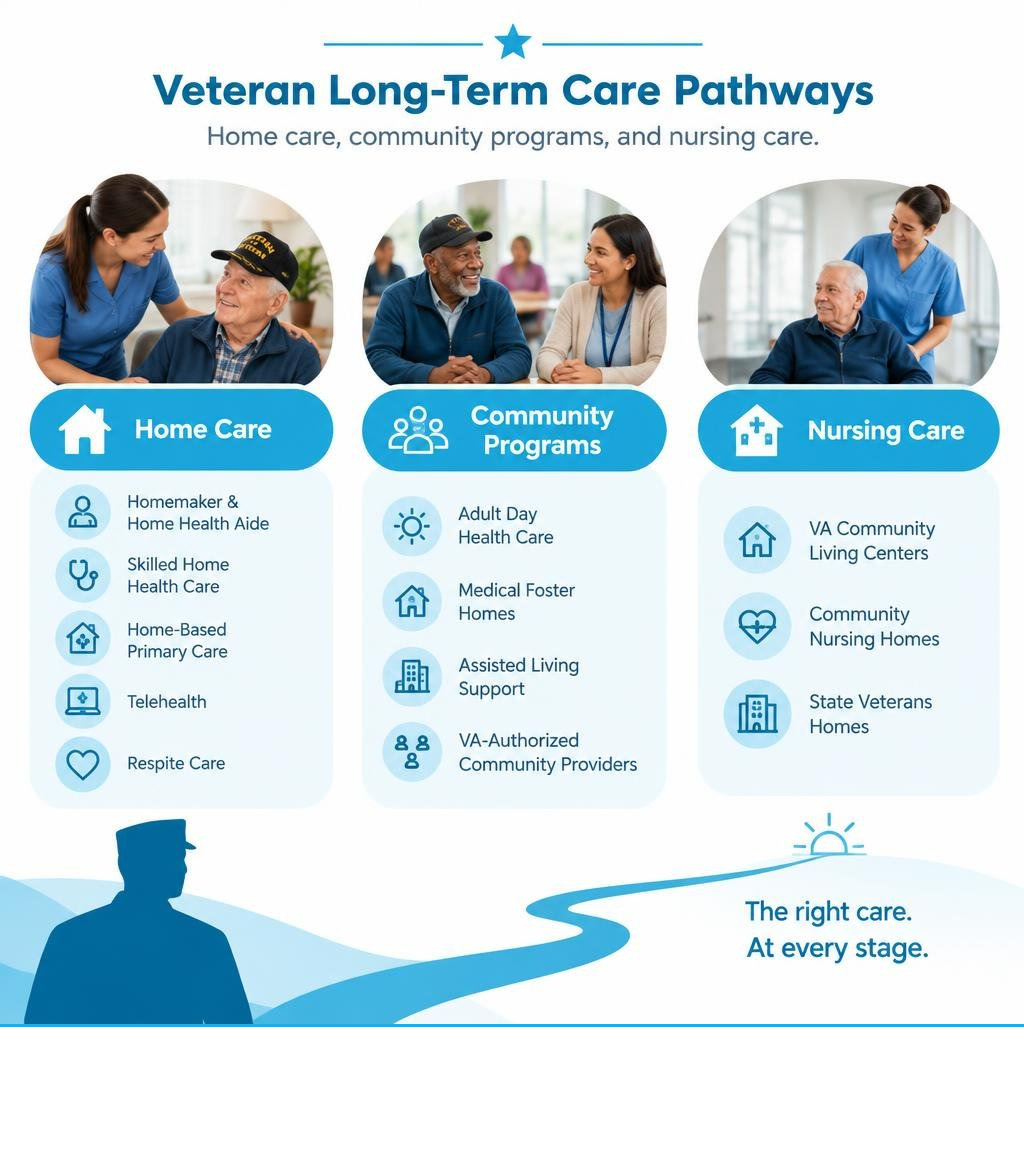
Common VA-supported paths include:
- In-home care: Homemaker and Home Health Aide services, skilled nursing, Home-Based Primary Care, telehealth, and respite care.
- Community care: Adult day health care, medical foster homes, assisted living support, and VA-authorized community providers.
- Residential and nursing care: VA Community Living Centers, Community Nursing Homes, and State Veterans Homes.
Aging veterans may need this support due to mobility challenges, chronic illness, memory care needs, service-connected disabilities, or traumatic brain injuries. Financial support, such as the VA Aid and Attendance pension benefit, can also help families cover daily care costs.
Eligibility and Financial Pathways for Federal Veterans Extended Care
Understanding how the Department of Veterans Affairs (VA) structures its extended care benefits helps families plan effectively. Access to VA long-term care begins with enrollment in the VA health care system and a clinical determination of medical need.
Under federal law, specifically § 1710B. Extended care services, the VA is mandated to provide a comprehensive spectrum of geriatric evaluations, nursing home care, adult day health care, and non-institutional alternatives.
Eligibility determinations and out-of-pocket costs depend on several key factors:
- Clinical Need: A VA clinician must assess that the veteran requires assistance with activities of daily living (ADLs) or skilled clinical supervision.
- Service-Connected Disability Rating: Veterans with higher combined disability ratings receive priority placement and comprehensive coverage.
- Priority Group Classification: Enrolled veterans are assigned to Priority Groups 1 through 8, which determines benefit levels and copayment responsibilities.
- Financial Thresholds: For non-service-connected conditions, copayments are assessed using an income and asset review that protects spousal assets and basic living allowances.
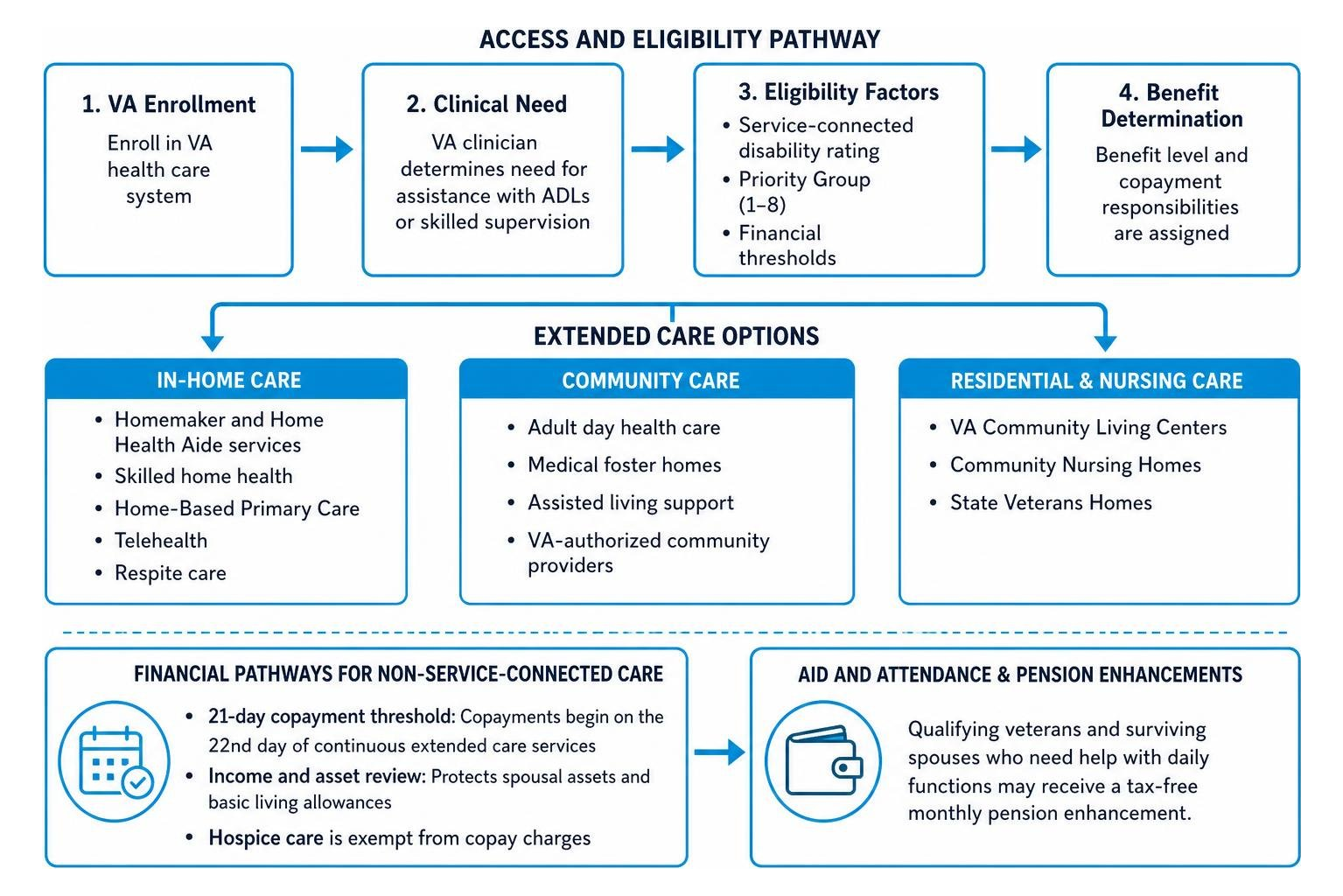
For non-service-connected care, the VA enforces a 21-day copayment threshold. Copayments do not begin until the 22nd day of continuous extended care services, and hospice care is completely exempt from copay charges. You can review the step-by-step process through this guide to eligibility criteria for disabled veteran home care.
Aid and Attendance and Pension Enhancements
Veterans and surviving spouses who require help with basic daily functions may qualify for the Aid and Attendance benefit. This is a tax-free monthly pension enhancement paid in addition to the standard VA monthly pension.
To qualify, a veteran must meet minimum active-duty service criteria (typically at least 90 days of active service with at least one day during an eligible wartime period) and meet one of the following physical requirements:
- Requiring the physical assistance of another person to perform daily tasks like bathing, dressing, eating, or adjusting prosthetic devices.
- Being bedridden due to illness or injury.
- Residing in a nursing home due to physical or cognitive incapacity.
- Having severe visual impairment (eyesight limited to 5/200 visual acuity or corrected visual field of 5 degrees or less).
The VA sets an annual net worth limit for pension benefits (which was $150,538 in 2023 and adjusts periodically with cost-of-living updates). This asset limit excludes the primary residence, reasonable personal vehicles, and basic household furnishings.
A related benefit, known as Housebound status, provides an increased monthly pension for veterans substantially confined to their immediate premises due to a permanent disability.
Understanding Institutional Long Term Care Options for Veterans
When a senior veteran requires continuous, 24-hour skilled clinical oversight or extensive physical assistance, institutional care settings are available. These options fall into three distinct administrative categories:
| Setting Type | Operating Authority | Funding Model | Best Suited For |
|---|---|---|---|
| VA Community Living Centers (CLCs) | Directly operated by the federal VA | Full VA coverage (copays based on service rating/income) | Short-term rehabilitation, skilled nursing, restorative care, memory care, and hospice. |
| State Veterans Homes (SVHs) | Owned and operated by individual state governments | State-funded, supported by VA per diem subsidies and Medicare/Medicaid | Long-term residential care, skilled nursing, specialized dementia units, and domiciliary care. |
| Community Nursing Homes (CNHs) | Contracted private or non-profit nursing facilities | VA pays directly via Community Care contracts | Veterans requiring 24/7 skilled care when a VA CLC is unavailable or distant. |
Community Living Centers (VA Nursing Homes) are designed to provide a home-like atmosphere rather than a sterile hospital environment. Veterans are encouraged to personalize their living areas, participate in community gatherings, and welcome visiting family members and pets.
Exploring In-Home and Community Long Term Care Options for Veterans
Most aging veterans prefer to receive compassionate, professional support in the comfort of their own homes. The VA’s non-institutional care framework enables seniors to remain in familiar surroundings while receiving clinical oversight, rehabilitative therapy, and daily personal care.

Choosing home-based support prevents unnecessary facility placement, preserves personal autonomy, and keeps families closely involved. For a broader overview of home-based solutions, see our comprehensive veteran home care resources.
Home-Based Primary Care and Skilled Home Health
The VA provides advanced clinical services directly to homebound individuals through specialized programs:
- Home-Based Primary Care (HBPC): An interdisciplinary team—consisting of a physician, nurse practitioner, registered nurse, physical therapist, social worker, and dietitian—manages complex chronic conditions at home. Learn more about bringing care home through the federal home-based primary care program.
- Skilled Home Health Care: Contracted community health agencies deliver professional clinical services, including IV therapy, physical and occupational therapy, catheter maintenance, and sterile wound dressing.
- Geriatric Patient-Aligned Care Teams (GeriPACT): Specialized outpatient care teams tailored to address the unique frailties, multi-system chronic illnesses, and cognitive changes associated with aging.
Families in North Texas can access dedicated clinical support by exploring federal veterans home health benefits in Dallas TX to keep their loved ones safe and comfortable.
How to Access Home-Based Long Term Care Options for Veterans
Under federal law, specifically federal home- and community-based services under 38 USC 1720L, the VA operates several programs designed to assist with personal care and daily living:
- Homemaker and Home Health Aide (H/HHA) Services: Trained caregivers visit the home to assist with bathing, dressing, grooming, light meal preparation, and medication reminders.
- Veteran-Directed Care (VDC): This flexible model provides veterans with a designated monthly budget to manage their own care plan. Under VDC, the veteran or their designated representative acts as the employer of record, selecting and scheduling their preferred personal care aides—including qualified family members or trusted neighbors.
- Adult Day Health Care (ADHC): Community-based day programs provide social activities, nutritious meals, companionship, and clinical monitoring while giving primary family caregivers dependable respite during working hours.
- Program of All-Inclusive Care for the Elderly (PACE): A comprehensive managed-care program combining medical, rehabilitative, and social support under a unified care plan for nursing-home-eligible individuals who wish to live in the community.
Caregiver Support and Community Care Integration
Family caregivers often take on immense physical and emotional responsibilities when supporting an aging or disabled loved one. The VA recognizes this commitment and provides structured programs to protect caregiver wellness and prevent burnout.
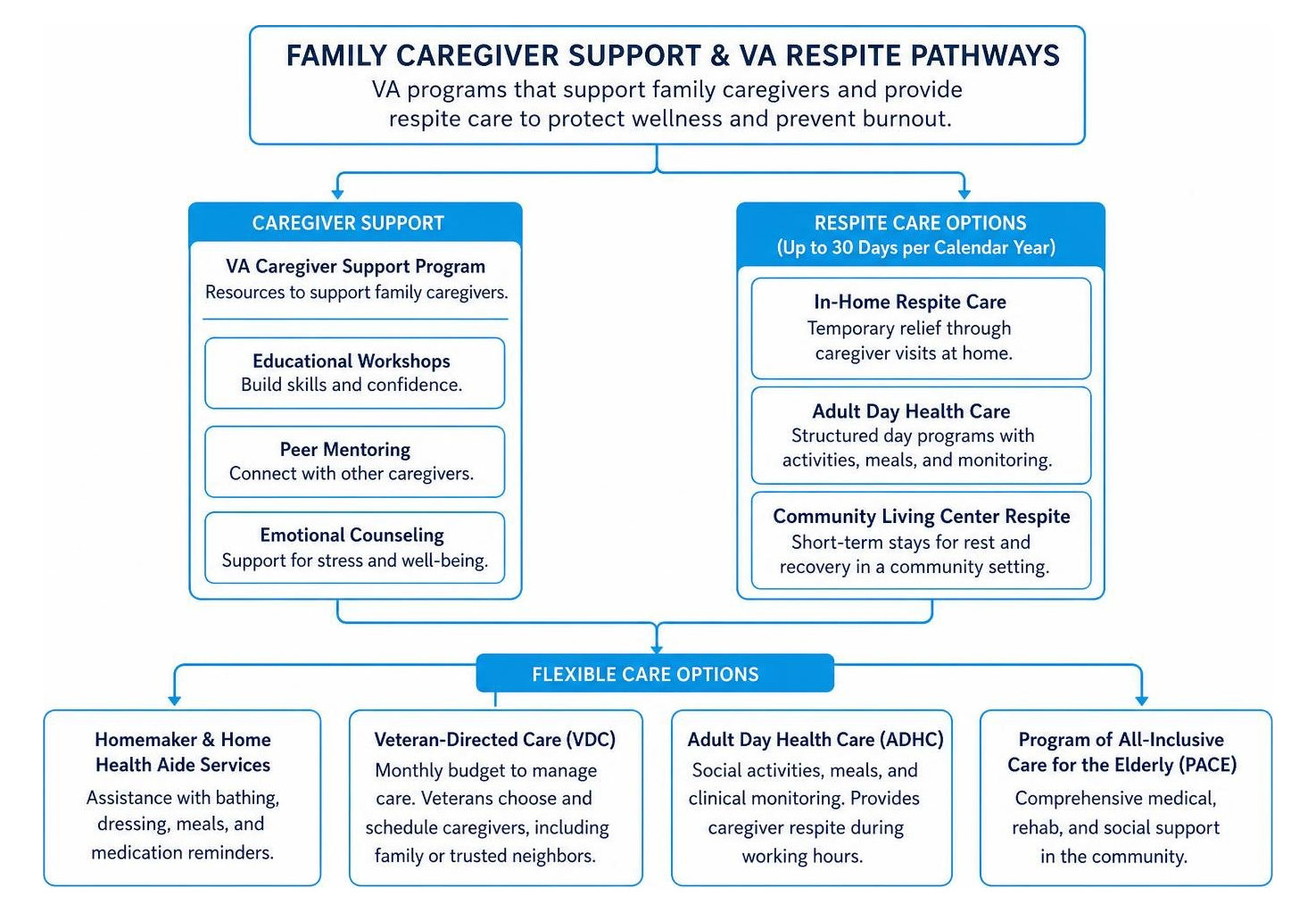
Under VA extended care regulations, enrolled veterans are eligible for up to 30 days of covered respite care per calendar year. Respite services can be delivered through in-home caregiver visits, adult day health centers, or short-term stays in a Community Living Center.
Additionally, the VA Caregiver Support Program offers educational workshops, peer mentoring, and emotional counseling. Review the federal family caregiver requirements and benefits to learn how spouses and children can receive formal recognition and financial stipends.
Navigating the Federal Community Care Network
When VA medical facilities cannot directly provide needed extended care services in a timely or accessible manner, care is coordinated through the VA Community Care Network (CCN).
Veterans qualify for community-based care authorizations when meeting specific federal criteria:
- The required clinical service is not offered at a local VA medical center.
- The veteran lives in a state or territory without a full-service VA medical facility.
- Travel distance exceeds federal drive-time standards (typically a 30-minute drive for primary/extended care or a 60-minute drive for specialty care).
- The VA facility cannot schedule an appointment within established timeliness standards (usually within 20 to 28 days).
- The veteran and their VA primary care physician agree that seeking community care serves the patient’s best clinical interest.
Once an authorization is issued, the VA pays contracted community providers directly, shielding the family from unexpected bills.
Managing Chronic Conditions and Service-Connected Health Risks
Long-term care plans for veterans must account for unique medical histories, including physical trauma, environmental exposures, and service-related injuries:
- Toxic Exposures: Airborne hazards, burn pits, Agent Orange, and industrial solvents often lead to respiratory illness, cardiovascular complications, and late-onset cancers requiring specialized palliative and symptom management.
- Traumatic Brain Injury (TBI) and Cognitive Decline: Blast exposures and head injuries can accelerate cognitive changes, necessitating structured dementia care and home safety modifications.
- Post-Traumatic Stress and Mental Health: Older veterans managing PTSD or sleep disorders benefit from consistent, trauma-informed care routines that prioritize emotional stability and calm environments.
- Substance Use Disorder Recovery: Managing chronic pain while maintaining recovery requires close coordination between home nurses, prescribing clinicians, and physical therapists.
- Geriatric Pain and Mobility Loss: Musculoskeletal injuries from service require individualized physical therapy, safe transfer techniques, and fall-prevention strategies.
Step-by-Step Guide to Applying for Federal Veterans Long-Term Care
Navigating the application process for VA long-term care involves clear, sequential steps:
- Enroll in VA Health Care: If not already enrolled, complete VA Form 10-10EZ (Application for Health Benefits) online, by mail, or in person at a local VA Medical Center.
- Schedule a Clinical Evaluation: Request an appointment with your VA primary care provider to conduct a comprehensive geriatric assessment and establish medical necessity for extended care.
- Complete Extended Care Financial Disclosures: If applying for non-service-connected assistance, submit VA Form 10-10EC (Application for Extended Care Services). This form calculates copay obligations while protecting family assets.
- Consult with a VA Social Worker: A VA medical social worker will evaluate your home environment, explain local program availability (such as Homemaker/HHA, Respite, or HBPC), and issue referrals.
- Select Your Care Provider: For community-based programs, choose an approved, contracted care agency to establish your personalized schedule and begin home services.
Frequently Asked Questions About Long-Term Care for Veterans
What is the primary difference between a federally operated veterans residential care center and a State Veterans Home?
Federally operated Community Living Centers (CLCs) are managed, staffed, and directly funded by the federal VA healthcare system. State Veterans Homes (SVHs) are established, owned, and operated by individual state governments. While the VA inspects SVHs and provides per diem financial subsidies to offset daily costs, admission guidelines and basic room-and-board rates are set by each state.
Does the federal veterans health system pay for room and board in assisted living facilities?
No. Under current federal guidelines, the VA does not pay for room and board in private assisted living facilities or adult family homes. However, the VA can provide and pay for skilled medical services, physical therapy, and home health aide visits while a veteran resides in an assisted living facility. Veterans may also use monthly payments from the VA Aid and Attendance pension benefit to help pay for their monthly residential room-and-board costs.
How does a service-connected disability rating affect extended care copayments?
Veterans with a combined service-connected disability rating of 70 percent or higher (or those rated 60 percent unemployable) are placed in Priority Group 1. These veterans receive all necessary nursing home care, institutional extended care, and home-based services with zero copayments. For veterans with lower ratings, copayments for extended care are calculated using an income-based sliding scale and do not begin until after the 21st day of care.
Compassionate Veteran Care in North Texas
Planning for the future means ensuring our aging heroes receive the dignified, dependable, and compassionate care they earned through their service. Whether your family needs skilled nursing, physical therapy, help with daily personal routines, or temporary caregiver respite, exploring home-based options provides safety, comfort, and vital peace of mind.
Lucent Health Group is a veteran-led, locally owned home healthcare provider serving families across North Texas, including Dallas, Plano, Fort Worth, McKinney, Frisco, and surrounding counties. Our dedicated team of registered nurses, therapists, and certified aides brings professional clinical care directly to your living room. We’re proud of our multilingual staff—fluent in Spanish, Farsi, Vietnamese, Russian, Hindi, and Mandarin—ensuring clear communication and culturally sensitive care tailored to your family’s unique needs.
To learn how we can support your loved one with personalized, compassionate home care, explore our specialized veteran in-home care services or speak with our local care team today.