
Why In-Home Senior Assistance Matters for North Texas Families
In-home senior assistance is professional support that helps older adults continue living safely and comfortably in their own homes. Instead of moving to a facility, seniors receive personalized care from trained caregivers and medical professionals who come to them.
What you need to know right now:
- Companion Care – Help with daily activities, meals, light housekeeping, and social interaction
- Personal Care – Assistance with bathing, dressing, mobility, and hygiene
- Skilled Nursing – Medical care including medication management, wound care, and vital monitoring
- Therapy Services – Physical, occupational, and speech therapy at home
- Specialized Care – Support for dementia, chronic conditions, and post-hospital recovery
Average costs: $25-40 per hour for non-medical care, $50+ per hour for skilled nursing. Medicare covers some medical services when medically necessary.
The numbers tell a powerful story. Research shows that 80% of people prefer to stay at home as they age. This isn’t surprising when you consider what home means—it’s where memories live, where routines feel natural, and where independence thrives.
Here’s what matters most: seniors who stay home are often happier and healthier. They recover faster from illness. They maintain stronger connections with family and community. And they keep the dignity that comes from living life on their own terms.
For families in North Texas, in-home care offers something equally valuable—peace of mind. You’re not making an impossible choice between your loved one’s safety and their happiness. Professional caregivers can provide the support your parent needs while honoring the life they’ve built.
Whether you’re noticing small signs that Mom needs help with groceries, or Dad’s recovering from a hospital stay and needs skilled nursing care, understanding your options is the first step. This guide will walk you through everything—from recognizing when it’s time to get help, to finding the right provider, to understanding what Medicare covers.
The Core Benefits: Why Choose In-Home Care?
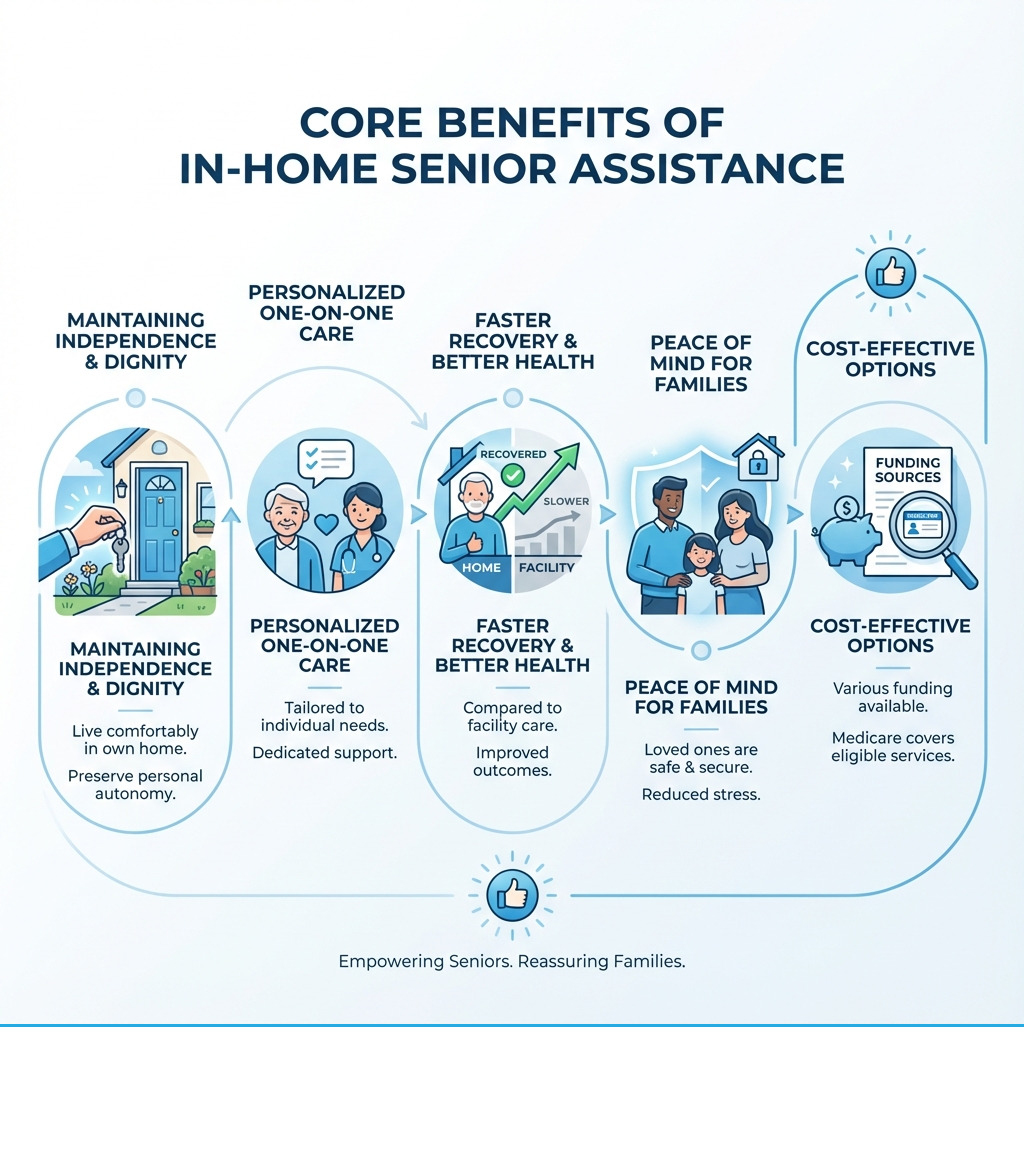
Choosing in-home senior assistance is about more than just receiving care; it’s about preserving a way of life. The benefits extend far beyond practical help, touching on emotional well-being, personal dignity, and family peace of mind.

One of the most significant advantages is maintaining independence. Seniors can continue to make their own choices about daily routines, meal times, and activities, fostering a sense of control that is often diminished in institutional settings. This also helps preserve their dignity, as they receive personalized support in the privacy and comfort of their familiar surroundings.
Staying in one’s home means staying connected to the community and loved ones. It allows seniors to continue participating in local events, visiting friends, and enjoying the comfort of their own neighborhood. This continuity is vital for emotional health, reducing feelings of isolation and loneliness.
Research consistently shows that seniors who choose to stay at home are often happier, healthier, and recover faster from illness or injury than those living in assisted living facilities. The familiar environment reduces stress and anxiety, contributing to better overall health outcomes. With personalized one-on-one attention from a dedicated caregiver, seniors receive care custom precisely to their needs, rather than a one-size-fits-all approach. This focused care can lead to faster recovery and improved management of chronic conditions.
For families, the decision to opt for in-home care brings immense peace of mind. Knowing that a trusted professional is providing compassionate support allows family members to focus on their relationships with their loved ones, rather than being solely consumed by caregiving tasks. This approach often proves to be a more engaging and less disruptive option than moving to a facility. To learn more about how in-home care compares to other options, you can read our detailed comparison: In-Home Care vs. Assisted Living.
What Types of In-Home Senior Assistance Are Available?
In-home senior assistance offers a spectrum of services, ranging from daily companionship to complex medical care. Lucent Health Group provides comprehensive non-medical and medical care designed to meet diverse needs right in the comfort of your loved one’s home in North Texas. These services are custom to support independence and improve quality of life. You can explore all our offerings on our Our Services page, and learn more about how we personalize care in North Texas here: Personalized In-Home Care Services North Texas.
Companion and Personal Care
Many seniors benefit greatly from non-medical support that helps with daily living and provides valuable social interaction.
- Companionship and Social Interaction: Caregivers offer friendly conversation, engage in hobbies, and provide emotional support, reducing feelings of isolation.
- Light Housekeeping: Assistance with tidying up, laundry, and maintaining a clean living space.
- Meal Preparation: Planning and cooking nutritious meals, often custom to dietary restrictions, and ensuring seniors receive proper nourishment.
- Errands and Transportation: Help with grocery shopping, picking up prescriptions, and transportation to appointments or social outings.
- Activities of Daily Living (ADLs): These are fundamental tasks for self-care. Personal care assistants help with:
- Bathing and Hygiene: Ensuring seniors stay clean, safe, and comfortable while maintaining their dignity.
- Dressing: Assistance with choosing appropriate clothing and getting dressed.
- Mobility Assistance: Support with moving around the home, transferring from bed to chair, and reducing fall risks.
These services are crucial for maintaining dignity, hygiene, and independence. Our dedicated caregivers are specifically trained to provide compassionate support for these essential daily tasks. For more details on these vital services, please visit our Caregiver Services page. To understand the distinctions between different types of non-medical care, you can also read our guide on Companion Care vs. Personal Care.
Skilled Nursing and Therapy Services
For seniors with more complex health needs, skilled medical care can be provided at home by licensed professionals. This ensures continuity of care and faster recovery without the need for hospital stays.
- Medical Care at Home: Registered Nurses (RNs) and Licensed Vocational Nurses (LVNs) provide professional medical services, including:
- Medication Management: Administering medications, setting up pill organizers, and ensuring adherence to prescribed regimens.
- Wound Care: Cleaning and dressing wounds, monitoring for infection, and promoting healing.
- Injections: Administering prescribed injections.
- Vital Signs Monitoring: Regularly checking blood pressure, pulse, temperature, and respiration to track health status.
- Therapy Services: Our skilled therapists bring rehabilitation directly to your loved one.
- Physical Therapy: Helps seniors regain strength, balance, and mobility after injury, surgery, or illness.
- Occupational Therapy: Focuses on improving fine motor skills and adapting daily tasks to improve independence.
- Speech Therapy: Addresses communication difficulties and swallowing disorders.
These services are often considered “home health services” and may be covered by Medicare if a doctor certifies that skilled services are medically necessary and you are homebound. Medicare defines “part-time or intermittent” care as generally up to 8 hours a day (combined skilled nursing and home health aide services) for a maximum of 28 hours per week, though more frequent care (up to 35 hours/week) can be approved for short periods if medically necessary. You can find more comprehensive information on home health services and Medicare coverage at the Information on home health services from Medicare website. For a full understanding of our nursing care, visit our Nursing Care page, and for therapy options, see Therapy & Rehab.
Specialized In-Home Senior Assistance
Certain conditions require specialized approaches, and in-home senior assistance can provide targeted care that addresses these unique needs.
- Dementia and Alzheimer’s Care: This specialized care focuses on creating safe and predictable environments, managing challenging behaviors, and providing cognitive stimulation through engaging activities. Caregivers trained in dementia care understand how to communicate effectively and provide compassionate support that prioritizes dignity and reduces anxiety.
- Palliative Care: For individuals facing serious illnesses, palliative care aims to provide comfort and improve quality of life. This includes symptom management, emotional support for both the senior and their family, and assistance with daily needs to ensure maximum comfort.
- Post-Hospitalization Support: After a hospital stay, many seniors need temporary, focused support to recover fully and prevent readmission. This can involve medication reminders, assistance with mobility, wound care, and helping with daily tasks during the recovery period. Our services are designed to ensure a smooth transition back home: Home Care After Hospital Discharge.
- Chronic Disease Management: Living with conditions like diabetes, heart disease, or Parkinson’s often requires ongoing support. Specialized in-home senior assistance can help with monitoring symptoms, adhering to treatment plans, and making lifestyle adjustments to manage the disease effectively.
How to Plan and Arrange for Care
Navigating senior care can feel overwhelming, but taking a structured approach can help you feel more in control of the journey. Planning for in-home senior assistance involves several key steps, ensuring your loved one receives the most appropriate and effective support. Our goal is to empower families in North Texas through this process, helping seniors age in place with dignity and comfort. For more guidance on supporting aging in place, visit Aging in Place Support.
Step 1: Recognizing the Need for Help
The first step is often the hardest: acknowledging that a loved one needs additional support. It’s important to observe for signs of struggle that might indicate a need for in-home senior assistance. These can include:
- Increased forgetfulness or confusion
- Difficulty managing daily tasks like cooking, cleaning, or personal hygiene
- Unexplained weight loss or poor nutrition
- Frequent falls or mobility issues
- Changes in mood or behavior, such as increased anxiety or social withdrawal
Recognizing these signs early is crucial. We offer resources like Early Signs Aging Parents Need Care to help you identify these indicators. Once you’ve noticed these changes, the next challenge is often having an open and empathetic conversation with your loved one. This can be a sensitive topic, but approaching it with care and respect is key. Our guide, How to Talk to Aging Parents About Care, provides helpful tips for these discussions. Determining when to hire professional help comes down to ensuring safety, maintaining quality of life, and providing peace of mind for everyone involved. For a deeper dive into this decision, consider reading When to Hire a Caregiver.
Step 2: Creating a Personalized Care Plan
Once the need for care is established, the next step is to create a care plan that is as unique as your loved one. This is where care coordinators play a vital role. A care coordinator acts as your guide, assessing medical and personal needs, and helping to set realistic care goals. They will consider:
- Medical Needs: Current health conditions, medications, and any specialized care requirements.
- Personal Preferences: Your loved one’s routines, hobbies, and desired activities.
- Cultural and Linguistic Factors: At Lucent Health Group, we understand the importance of culturally sensitive care. Our multilingual staff, speaking Spanish, Farsi, Vietnamese, Russian, Hindi, and Mandarin, ensures that communication is clear and care respects your family’s background and values.
- Safety: A comprehensive home safety evaluation is essential to identify and mitigate potential hazards. This includes assessing fall risks, lighting, and accessibility. You can find valuable insights on this topic in our article on Home Safety for Aging Parents.
The care coordinator works collaboratively with you, your loved one, and their doctors to develop a comprehensive schedule of services. This ensures the care plan is flexible, adaptable, and truly personalized to support your loved one’s well-being.
Step 3: Finding and Vetting a Provider
Finding the right provider for in-home senior assistance in North Texas is a critical step. Start by looking for local agencies that serve your community, whether you’re in Dallas, Plano, Fort Worth, or other parts of North Texas.
When evaluating providers, ask crucial questions:
- Licensing and Insurance: Ensure the agency is fully licensed and bonded, and carries appropriate liability insurance.
- Caregiver Screening Process: Inquire about their hiring process. A reputable agency will conduct thorough background checks, including criminal history and reference checks. They should also verify certifications and training (e.g., Certified Nursing Assistant (CNA) or Home Health Aide (HHA)).
- Caregiver Vetting: Beyond initial checks, ask how they match caregivers with clients. The importance of compatibility cannot be overstated; a good match in personality and interests can significantly improve the care experience.
At Lucent Health Group, we pride ourselves on our rigorous caregiver screening process and our commitment to finding the perfect fit for your loved one. As a veteran-led, locally owned home healthcare provider, we understand the local community and are dedicated to serving our neighbors with the highest standards of care. For more tips on selecting a provider, refer to Caring for Aging Loved Ones: Tips for Choosing the Right Home Healthcare Provider.
Understanding Costs and Funding Options
Understanding the costs associated with in-home senior assistance and exploring available funding options is a key concern for many families. While the specific costs can vary based on the level and frequency of care needed, knowing what to expect can help you plan effectively.
Typical costs for non-medical in-home senior assistance in North Texas can range from $25 to $40 per hour. For skilled nursing care, which requires licensed medical professionals, hourly rates typically start at $50 and can go higher. These rates depend on factors like the caregiver’s experience, the complexity of care, and the specific services provided.
Several funding options can help cover the expenses of in-home senior assistance:
- Medicare: Medicare Part A (hospital insurance) and Part B (medical insurance) may cover part-time or intermittent skilled nursing care, home health aide services, physical therapy, occupational therapy, and speech-language pathology services if a doctor certifies that services are medically necessary and the individual is homebound. Medicare generally does not cover non-medical companion care or personal care if that’s the only care needed.
- Medicaid: Medicaid is a state and federal program that provides health coverage to low-income individuals. Eligibility and covered services vary by state, but in Texas, Medicaid programs like STAR+PLUS can provide in-home senior assistance for eligible individuals who meet income and functional criteria.
- Private Health Insurance: Some private health insurance plans, particularly those offering comprehensive benefits, may cover a portion of in-home senior assistance, especially for skilled medical care. It’s essential to review your policy details or contact your provider directly to understand your coverage.
- Long-Term Care Insurance: If your loved one has a long-term care insurance policy, it is specifically designed to cover services like in-home senior assistance, including personal care and skilled nursing, once certain triggers are met (e.g., inability to perform a certain number of ADLs).
- Veterans’ Benefits: The U.S. Department of Veterans Affairs (VA) offers various programs, such as Aid and Attendance, that can help eligible veterans and their surviving spouses pay for in-home senior assistance. You can learn more about these resources from the U.S. Department of Health and Human Services.
- Private Pay: Many families choose to pay for in-home senior assistance directly out-of-pocket, especially for non-medical services or when other funding sources do not cover the full extent of care needed.
Understanding these options can help you make informed decisions about financing your loved one’s care.
Frequently Asked Questions about In-Home Senior Assistance
Families often have many questions when considering in-home senior assistance for their loved ones. Here are some of the most common inquiries, along with clear, reassuring answers.
How do I know which level of care my loved one needs?
Determining the appropriate level of care begins with careful observation and professional assessment. Generally, care falls into two main categories:
- Non-Medical Care: This includes companion care and personal care, focusing on assistance with daily tasks, companionship, light housekeeping, meal preparation, and help with ADLs like bathing, dressing, and mobility. If your loved one primarily needs help with these everyday activities to maintain independence, non-medical care may be suitable.
- Skilled Care: This involves medical services provided by licensed nurses or therapists, such as medication management, wound care, injections, vital signs monitoring, physical therapy, occupational therapy, and speech therapy. If your loved one has medical conditions requiring professional healthcare oversight, skilled care is necessary.
The best way to determine the precise level of care is through a professional assessment conducted by a care coordinator or healthcare professional. They can evaluate your loved one’s physical and cognitive abilities, medical conditions, and daily needs. We always recommend consulting with your loved one’s doctors to get their professional medical opinion. This assessment will help create a custom care plan, as detailed in our “How to Plan and Arrange for Care” section above.
Can we change the care plan if our needs change?
Absolutely. One of the significant advantages of in-home senior assistance is its inherent flexibility. Care plans are not static; they are designed to evolve with your loved one’s changing needs. Open and ongoing communication with your chosen provider, like Lucent Health Group, is essential.
As your loved one’s condition improves, declines, or simply shifts, the care plan can be adjusted accordingly. This might involve increasing or decreasing the number of hours, modifying specific services, or adapting to new medical requirements. For instance, a senior recovering from surgery might initially need intensive post-hospitalization support, which can then transition to less frequent companion care as they regain independence. We understand that needs can range from temporary recovery to long-term support, and our services are designed to accommodate this journey. Learn more about how care can adapt over time by reading From Temporary Recovery to Long-Term Care.
What makes a caregiver qualified?
A qualified caregiver for in-home senior assistance possesses a combination of professional training, experience, and essential personal qualities. At Lucent Health Group, we prioritize these aspects to ensure the highest standard of care for families in North Texas.
Key qualifications include:
- Training and Certifications: Caregivers often hold certifications such as Certified Nursing Assistant (CNA) or Home Health Aide (HHA). Skilled nursing care is provided by licensed Registered Nurses (RNs) and Licensed Vocational Nurses (LVNs). These certifications ensure they have the foundational knowledge and practical skills to provide effective care.
- Rigorous Background Checks: Reputable agencies conduct thorough background checks, including criminal history checks, reference checks, and verification of previous employment and training. This provides families with peace of mind regarding the safety and trustworthiness of the caregiver.
- Essential Soft Skills: Beyond technical skills, a truly qualified caregiver demonstrates empathy, patience, reliability, and excellent communication. They are compassionate individuals who genuinely care about the well-being of those they serve, creating a warm and supportive environment.
- Experience: While formal training is crucial, practical experience in caring for seniors with various needs is invaluable.
Lucent Health Group is committed to providing caregivers who are not only professionally competent but also deeply compassionate and culturally sensitive.
Your Partner in Compassionate Home Care
Choosing in-home senior assistance is a profound decision, one that prioritizes your loved one’s desire to thrive at home, surrounded by familiar comforts and cherished memories. It’s about preserving dignity, fostering independence, and providing personalized, one-on-one care that truly makes a difference in their daily life and overall well-being. For families in North Texas, this choice brings immense peace of mind, knowing your loved one is safe, comfortable, and respected.
At Lucent Health Group, we understand the emotional weight of this decision. As a veteran-led, locally owned home healthcare provider, we are deeply rooted in the communities of North Texas, including Dallas, TX, Plano, TX, Fort Worth, DFW, Dallas County, Collin County, Denton County, and many more surrounding areas. We are your neighbors, committed to serving our community with integrity and compassion.
Our unique strength lies not only in our comprehensive range of services—from companion and personal care to skilled nursing and specialized therapies—but also in our dedication to culturally sensitive care. Our multilingual staff, proficient in Spanish, Farsi, Vietnamese, Russian, Hindi, and Mandarin, ensures that communication is never a barrier to understanding and connection. We believe that truly personalized care accepts every aspect of an individual’s identity and heritage.
We invite you to reach out and find how Lucent Health Group can be your trusted partner in ensuring your loved one’s well-being. Let us help you steer the path to compassionate, professional home care, custom precisely to your family’s needs. Learn more about our skilled nursing and comprehensive care services and take the first step towards peace of mind.